

Mini cranes for roofing work
Use a Hoeflon mini crane to lift and precisely position roofing materials, dormers, and roof elements at height, even in locations with limited space.
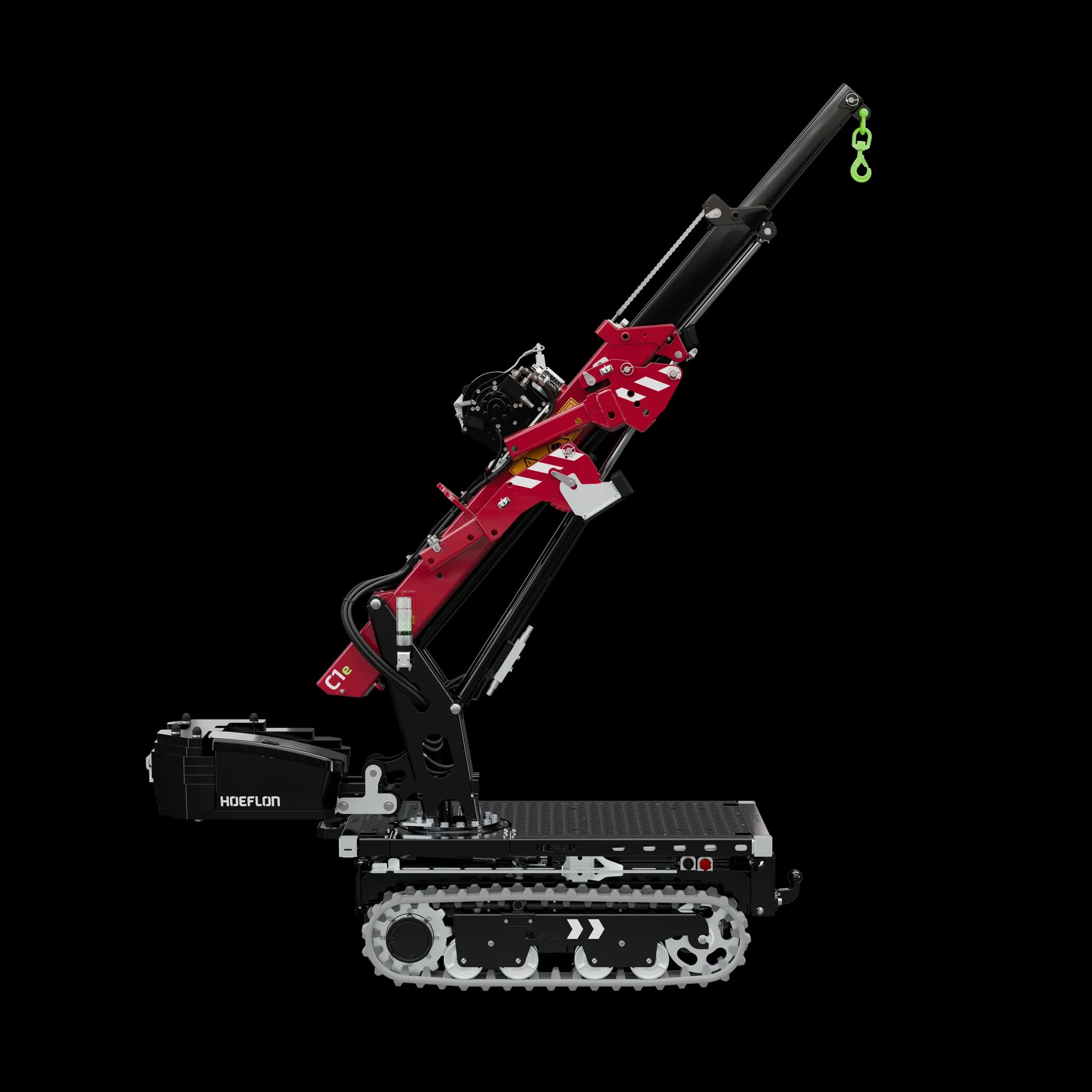
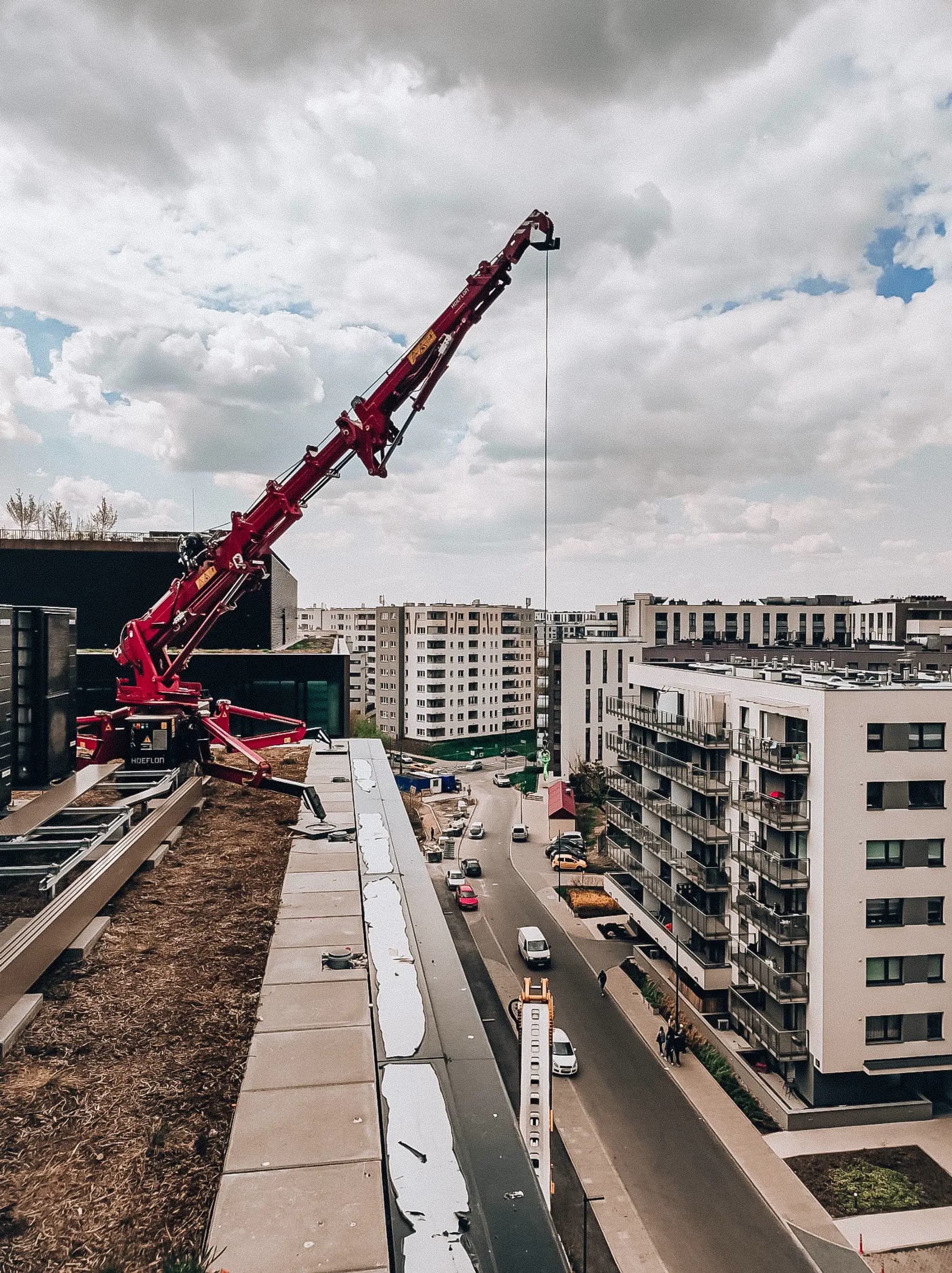
With a Hoeflon mini crane, you can lift materials, dormers, and other roof elements to roof height and position them precisely. This is particularly useful at job sites with limited setup space, where using a large mobile crane is difficult. Thanks to its compact size, you can position the crane close to the building, even when access is through a narrow driveway, backyard, or courtyard.
Lifting and precise positioning with a mini crane for roofing work
When carrying out roofing work, the work on the roof itself often takes less time than getting materials and components up there and positioning them accurately. A small crane from Hoeflon takes care of precisely this part of the process: lifting loads to roof height and positioning them in a controlled manner at the installation point.
As soon as materials become too heavy or too long to transport up via scaffolding, a crane comes into play. Roofers, contractors, and installation companies use Hoeflon mini cranes for a variety of tasks at height, including:
- roof renovations on homes, commercial buildings, and other non-residential buildings
- maintenance and replacement of roof coverings and insulation
- transporting materials: rolls of roofing membrane, insulation boards, pallets of roof tiles, and wood and steel profiles
- installing dormers, skylights, and prefabricated roof elements
- installing wood or steel structural components
- removing old roof coverings, demolition debris, and replaced components
- transporting tools and equipment to the elevated work area

How to position a dormer correctly
When installing a dormer, the work does not end once it reaches roof height: the element must also fit precisely into the roof opening. This takes place in 3 steps:
1. Lifting: the dormer is attached to the crane hook from the trailer and lifted to roof height, with the load weight displayed on the remote control.
2. Positioning: the load is swung over the roof and carefully lowered into the opening, so the crew on the roof only needs to make minor adjustments.
3. Holding during installation: the crane holds the element in position while it is aligned and secured.
The same approach applies to prefabricated roof elements, roof structures, roof trusses, and skylights.
Attachments for long loads and glass
How precisely a dormer or roof element can be positioned depends on 2 factors: the controls and the equipment attached to the crane hook. All Hoeflon cranes have a wireless remote control. You can see the load weight directly on the display and control each movement individually from the position that gives you the best view of the load.
The equipment attached to the hook varies depending on the job. For long or difficult-to-handle loads such as beams, pipes, and pallets, you can equip the crane with a multitool, depending on the model. A jib provides additional reach. When working with skylights or glazed roof elements, a glass vacuum lifter is a useful addition.
Working more efficiently during roof renovation and maintenance
With a Hoeflon mini crane, you can work from one fixed position beside the building. You drive the crane onto the job site on its tracks, deploy the outriggers, and lift everything needed onto the roof from that position. Materials reach the required height in one lift rather than being transported via scaffolding and ladders, reducing the amount of logistics needed around the building. The process works just as well in reverse: old roof coverings and replaced components are lowered on the hook and placed directly into a dumpster, without temporary storage on the roof or sidewalk.
This also works in locations where a large construction crane cannot be used, such as a backyard, courtyard, or narrow access road. On most models, the outriggers extend hydraulically and are height-adjustable, allowing you to level the crane even on a sloping driveway or uneven ground. This means you can also take on jobs at locations you would otherwise have had to turn down.
The crane is electric, so it operates quietly and without emissions. This is particularly beneficial in residential areas and at buildings that remain in use during the work. For recurring maintenance jobs, the benefits add up: you do not need to check whether a crane can be set up at every individual address.
Which Hoeflon is suitable for your roofing work?
The model you choose depends on the height you need to reach and the weight of the materials you need to lift onto the roof. For most roofing jobs, the C4e, C6e, and C10e are the most suitable options. They combine lifting heights of 14.6 to 22 m with sufficient capacity for pallets of roof tiles, insulation, dormers, and prefabricated elements. With widths starting at 75 cm, they fit through a standard doorway and can therefore pass through a gate into a backyard or courtyard.
If you work on high roofs or non-residential buildings, the C30eL reaches a lifting height of 30.5 m, while the C30e can lift loads of up to 9,000 kg. Unsure which model to choose? Our selection aid helps you find the right model in 1 minute.
Frequently asked questions about mini cranes for roofing work
Can a mini crane install a dormer?
Yes. The crane lifts the dormer to roof height, moves it in a controlled manner over the roof, and carefully lowers it into the opening. The crew on the roof then aligns and secures the element. The most suitable model depends on the weight of the dormer, the required lifting height, and the distance between the crane and the roof opening.
What materials can I lift onto a roof with a crane?
These include roof coverings, insulation materials, pallets of roof tiles, wood and steel structural components, skylights, dormers, and prefabricated roof elements. Old roof coverings and replaced components can also be lowered using the crane. The maximum load depends on the model and the combination of reach and lifting height.
Can a Hoeflon crane be used in a location with limited space?
Yes, the cranes have been developed for precisely these situations. Models starting at 75 cm wide fit through standard doorways, gates, and garden paths. The adjustable outriggers also allow you to position the crane securely on uneven ground. This makes it possible to set up a crane in a backyard, courtyard, or narrow street in many cases.
What should I consider when choosing a crane for roofing work?
The main factors are load weight, lifting height, and horizontal reach. You should also consider access width, available setup space, and ground conditions on site. Do not forget the lifting accessories: choosing the right tool or vacuum lifter also affects how efficiently you can work.
Looking to buy a mini crane for roofing work? Request a quote
Tell us about your project: the weight of the heaviest load, the height you need to reach, and the space available around the building. We will advise you on the right model and lifting accessories. Would you like to see the crane in action first? Request a demo at your own site. Already have all the information you need? Explore our mini cranes or request a quote directly.


